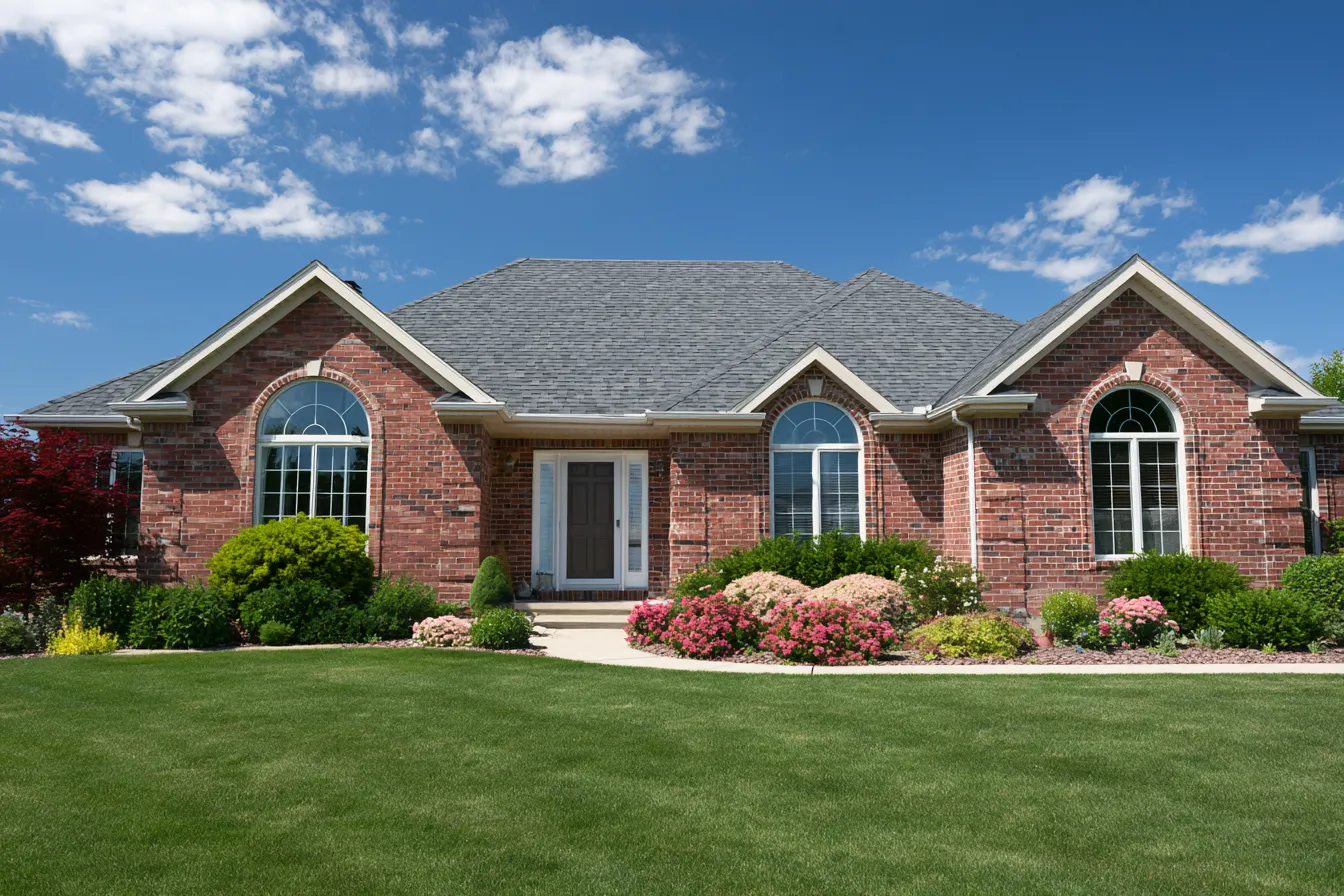
Two houses on the same street in Siloam Springs can get completely different answers about their roofs, because the town went up in waves. Half the houses here date from before 1992, roughly an eighth from before 1960, and about a fifth arrived in the 2000s, so the covering over you may be its first or its third. This guide says how to tell which one you have, and what that means for the next few years.
What a 1992 median actually means
Half the houses here are older than 1992. The NAHB study that most planning guidance still leans on puts asphalt shingles at around 20 years as a general figure, weather and installation quality allowing. A house built in 1992 that has never been re-roofed is well past that. More commonly it is on its second covering, put on somewhere in the 2010s, and that one is now the roof in question.
This is why the age of the house is a starting point and not an answer. What matters is the age of the covering, and the two are only the same thing once. A plat like Sweet Homes, still filling in, can hold two roof ages on one street. What a replacement runs here depends on which one you are actually buying.
The pre-1960 twelve percent
Roughly 12 percent of the houses here went up before 1960. Those roofs have almost always been replaced more than once, and the thing worth knowing about them is not the shingle but everything underneath. Decking, valley details and flashing on a house that old were built in one era and repaired in several, so opening one seam often turns up the next one.
That is the practical difference on an older Siloam Springs house. The covering is a known quantity. What is under it is the part that decides the number.
How the storm record shortens the clock
Age is only half of it. Benton County logged 18 hail days since 2023, and hail does not wait for a roof to be old. A covering put on in 2015 that took golf-ball hail in May 2025 is not a ten year old roof in any way that matters, because the weather layer came off early.
So the two questions run together. How old is the covering, and what has it been through. Either one on its own gives the wrong answer.
Deciding without guessing
The way through is boring and it works: find out when the current covering went on, then have somebody walk it and write down what they find. Two thirds of these houses are lived in by the people who own them, which usually means the paperwork from the last roof is somewhere in the house, and that single date narrows the question faster than anything on the roof does.
After that it is a matter of what the slopes actually show. A roof at 18 years with sound flashing and no storm history behind it can have several years left. A roof at 10 with a hail season on it may not, and roof repair is the cheaper answer whenever the rest of the slope is sound.
Finding out where yours stands
If the date of your current covering is not filed somewhere in the house, the roof will answer for itself. Get in touch with Siloam Springs Premier Roofing, and a local roofer walks the slopes and writes down their condition at no charge, so the repair or replace question gets settled on what is up there rather than on the build year. Contact us if a conversation is the easier place to start.