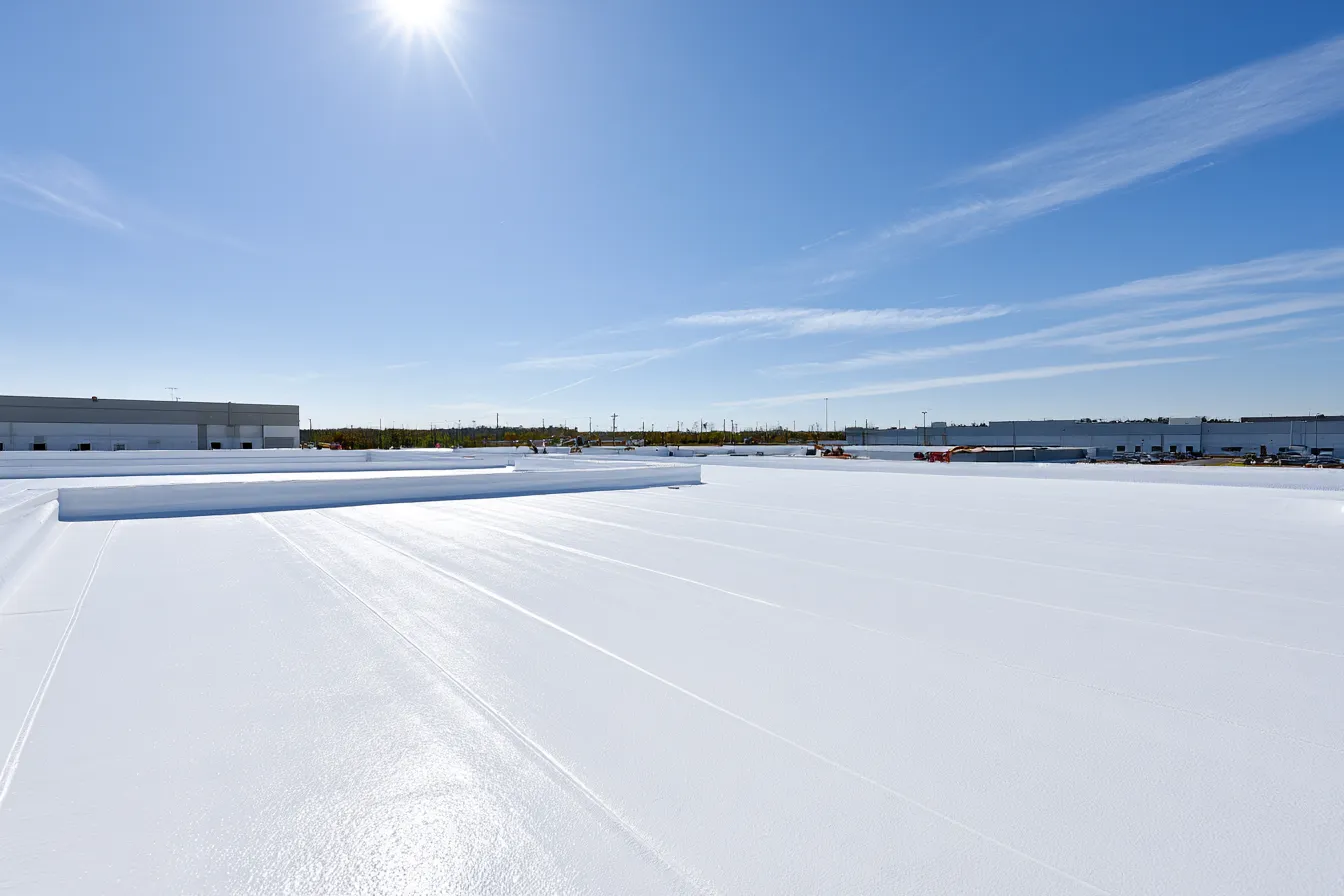
Flat Roof Repair in Siloam Springs, AR
Water that sits on a flat roof is usually a drainage fault, and those are fixable.
Some low-slope sections need a new membrane. Plenty need a lap closed and an outlet cleared, and our roofers say which repair yours needs.
Flat roof repairs on Siloam Springs buildings
Is Siloam Springs Premier Roofing the right call here?
If the water is sitting on a low-slope section, yes: the membrane, laps, penetrations and drains are the job, whether that section roofs a warehouse bay, a downtown storefront or the flat porch over somebody's front door. A leak on a pitched roof is a roof repair job, and a whole building that still needs a system chosen is commercial roofing.
Stand under the drain outlet during a hard rain. If nothing runs out of it, the water up there has no way off the building, and your roofer itemizes that outlet on the estimate.
Identify what is up there
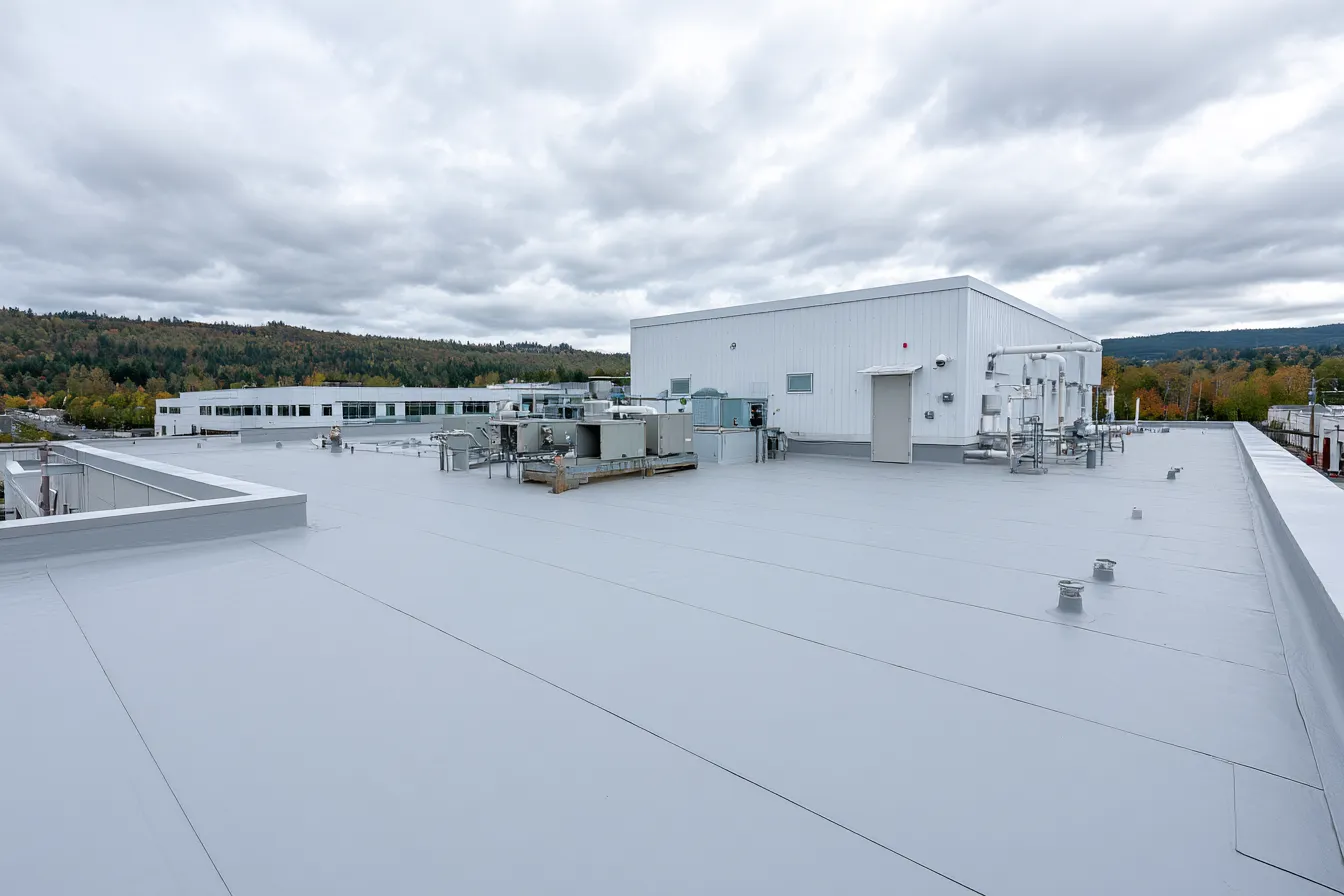
Built-up, modified bitumen, rubber membrane, single-ply. Which one is on the deck sets the repair, because a patch built for one sheet won't hold on another.
Seams and laps
On a low slope the lap fails before the open field does. Closing one properly is often the entire repair, and it takes the sheet's own joining method.
Flashing at penetrations
A vent stack, a conduit, an air handler curb: each interrupts the sheet and carries its own detail. So does the upstand where a membrane climbs a parapet.
Drains, scuppers and outlets
Drains and scuppers, the outlets cut through the wall at a roof's edge, cleared and then checked. A blocked one turns the whole field into a pond in one storm.
The fall itself
Sometimes water sits because the deck has no slope to send it anywhere, and sealing changes nothing. Tapered insulation or a rebuilt low spot is what answers a fall fault.
Recoat or replace
Over a sound sheet with dry board beneath it, a fluid coating reseals the top and adds years of service for well under replacement money. Over soaked board it adds none, because the water is already in.
Why water sits on a Siloam Springs flat roof
Most of these turn up before a ceiling stain does. They rarely mean the same thing, so somebody has to look.
Water still there days later
A low slope is meant to shed slowly. Water still lying there two or three days on has stopped draining altogether, and standing water takes years off a membrane.
Silt rings on the surface
Dried mud and grit leave a tide mark exactly where the water settles and stops. That ring tells your roofer where the low spot is on a roof that looks level from the ladder.
A soft spot underfoot
A section that gives under your foot has wet insulation beneath the sheet. That changes the job completely, since nothing applied on top of soaked board will dry it out.
A seam that has opened
A lap that has lifted or split along its edge is letting water past the joint. Caught early the fix stops at that seam; left long enough it reaches the insulation underneath.
Blisters across the field
Raised bubbles in the open field mean air or moisture is caught within the sheet or just beneath it. Sun and age drive them, and they show from the roof years before anything drips.
Growth at the outlet
Leaves, grit and anything green around a drain mean water has been standing there long enough to feed it. Clearing it is cheap; leaving it turns the outlet itself into the fault.
Repairing a flat section, step by step
A low-slope repair runs in a set order. Your roofer identifies the system and the fault first, and the work follows from what those turn out to be.
Where the water is showing
Give the room or bay it is coming into, and roughly when it started. On a flat section that last part narrows it a long way.
The system and the fault
A local roofer walks the section, names the membrane, and works out whether the water is held by the fall or by an outlet. You get photos of the water where it sits.
What the repair covers
Which laps, which outlets, and how much of the fall your roofer is touching, with one figure for the section under it. You read it before anybody sets a date.
Your call on the timing
Set it against another bid, or say go. A section that is still draining is rarely an emergency, and around here the weather has more to say about timing than anyone does.
What flat roof repair depends on
An outlet fault and a fall fault are not the same money. Clearing and resetting a drain, or reflashing the scupper it feeds, is a contained job that stops at one detail. Rebuilding the fall means tapered insulation or a low spot built back up under the membrane, and that sits closer to the wider cost picture than to a repair.
A flat repair is priced after your roofer has been on the section. Nothing here is a quote.
Flat roof questions building owners ask
Low-slope owners ask about different things than a homeowner with shingles does. Each answer here moves what a repair costs.
Start your Siloam Springs flat roof repair estimate
A rough idea of where it is coming through. Whatever anyone has already told you about the section. That is enough for our roofers to work from, at no charge, and you decide nothing the day you send it.