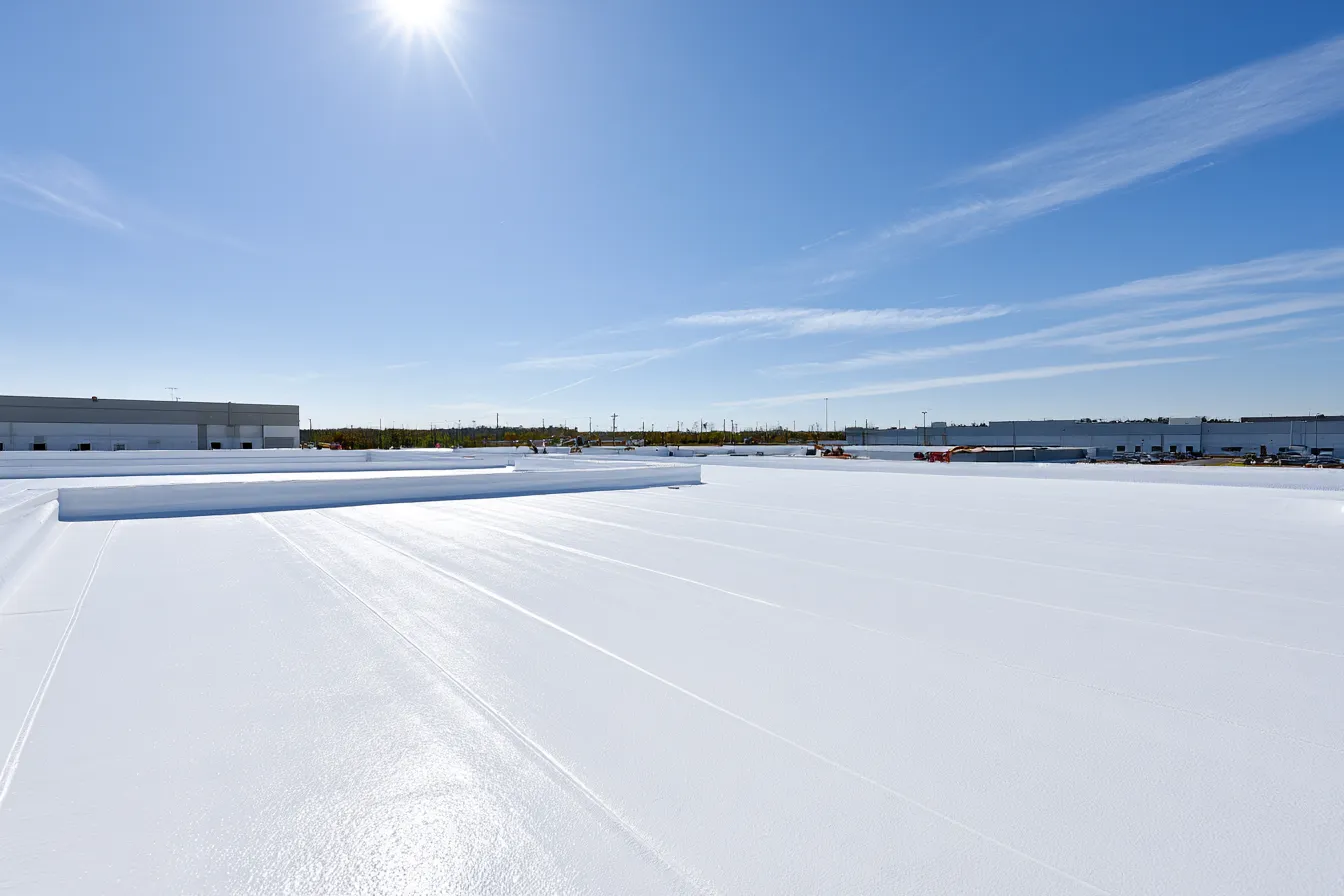
Commercial Roofing in Siloam Springs, AR
The roof gets looked at, the scope goes in writing, and the price is itemized before anything starts.
A closed bay and lost hours never show up on a quote. Our roofers plan a commercial job around how your building runs.
Commercial roofing around Siloam Springs
Two roofs, two different answers. One still dry underneath can often be sealed and given several more years; one with wet insulation under the membrane is past that point.
Most of what covers a business here is low-slope, tucked behind a parapet where nobody sees it. Then a Benton County spring comes through, and a roof that drains slowly holds the water for days. Standing weight works the seams apart.
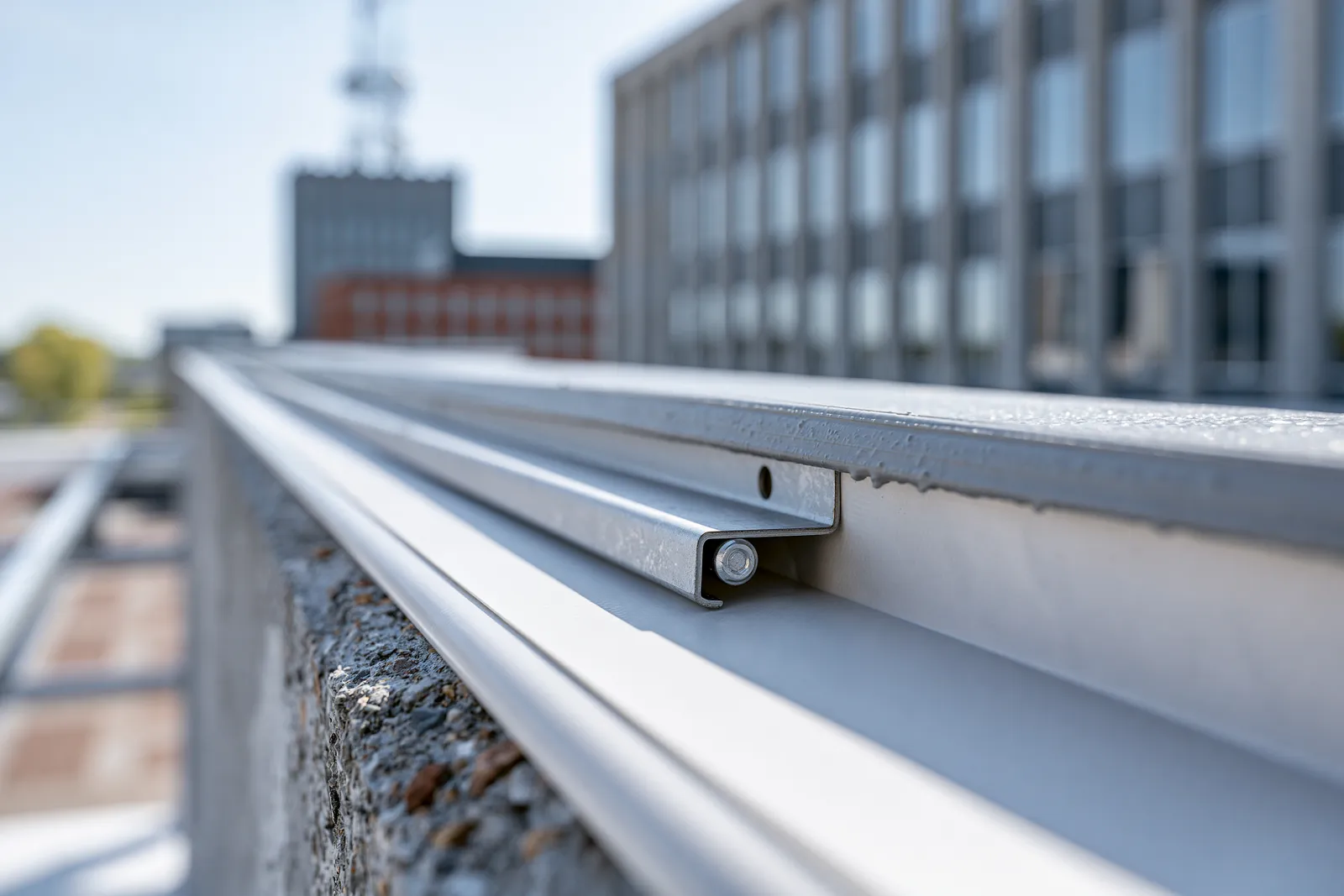
Low-slope and flat roof systems in use
A low-slope roof is sealed by a sheet or by layers, and around here it comes down to three. TPO is a light-colored plastic sheet, heat-welded seam to seam. EPDM is black rubber, easy through a cold snap. Modified bitumen is asphalt in reinforced rolls.
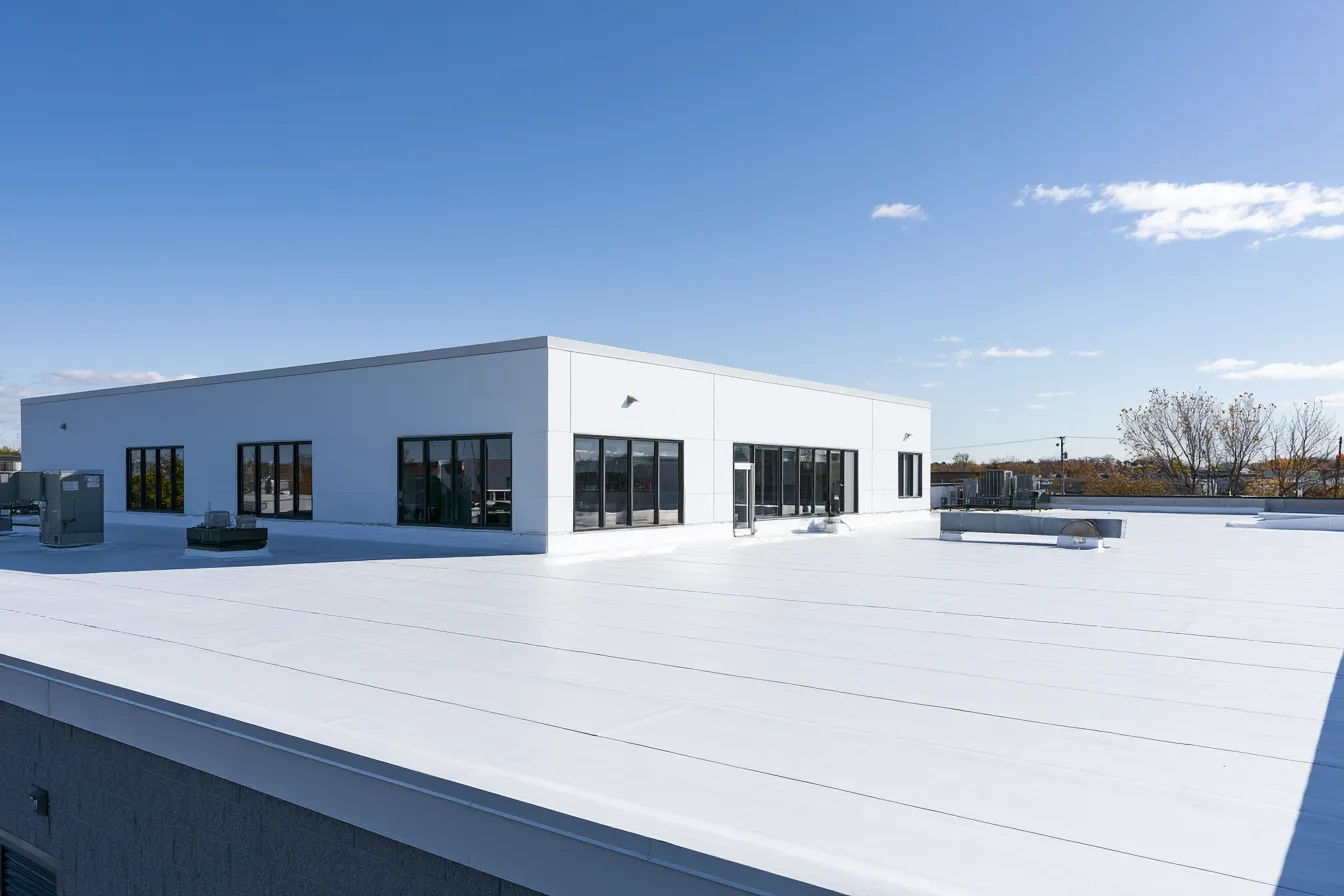
Which page yours belongs on
One seam letting go, or a bad flashing where the rest still has years left, is flat roof repair. A finished system, or work timed around your open hours, sits here.
Where the water goes
Our roofers trace the water: drains, scuppers, and the dips that are still wet long after the rain stopped. Ponding costs a flat roof more life than age does.
Seams, flashings and curbs
Every seam, parapet edge, pipe and HVAC curb gets read on its own. Those joints are where a flat roof gives up first, well ahead of the wide open part.
A test for wet insulation
Our roofers run a moisture test before making any recommendation. Water sitting under the membrane changes the answer completely, and nothing applied on top of it helps.
The deck and insulation call
What lies below the surface sets the choice between another layer and a full tear-off. Two coverings already stacked, or soaked insulation, and there is only one answer.
Pictures from up there
Your roofer takes pictures on the roof itself: the drains, the curbs, the seams that have opened. Most owners have never stood up there, so those pictures are the whole view of it.
How commercial roof systems compare
Your building settles this more than the membrane does. Drainage, whatever sits on the roof and what those units breathe out, foot traffic, what is already layered on the deck, and how much longer the building stays yours: those answers cut the three below down to one or two.
| System | How it goes on | Where it works best | Service life |
|---|---|---|---|
| TPO | A light-colored plastic sheet, heat welded at every seam | Bounces sun off a cooled building, and it is the single-ply most new work uses | Roughly 20 to 30 years |
| EPDM | A rubber sheet, adhered or held down, with sealed seams | Stays flexible in a cold snap, with decades behind it; seams are the watch point | Roughly 25 to 40 years or more |
| Modified bitumen | Asphalt in reinforced rolls, put down in layers | Punctures and foot traffic on smaller roofs that get serviced often | Roughly 20 years |
Those spans are ranges, and install quality plus upkeep moves them further than the pick between systems does.
Working around a Siloam Springs building that stays open
The roof gets done in sections, and each one is closed up before the crew leaves it. Downstairs that means short interruptions rather than one long shutdown.
Up on the roof
Your roofer measures the roof and checks the drains, the seams and every curb. What turns up sets the proposal.
A priced proposal comes back
Your roofer writes the job out line by line, with the boundary drawn between what is in and what is not.
Access, staging and tenants
You agree which entrance or bay goes out of use, where material sits, and what your tenants hear beforehand.
You pick the window
You choose when the work starts. A slow week or a gap between deliveries is usually the place to put it.
What building owners ask before committing
Owners ask these before they ask about price. The answers hold whether the building is a storefront, a shop or a warehouse.
Price your Siloam Springs commercial roofing
Tell us which building it is and what has turned up inside it. The walk up costs you nothing, and the proposal that follows is itemized enough to hand to whoever signs off on it.